What Is a Grossing Station? Why It Matters in Modern Histopathology Laboratories
Table of Content
[Hide]
Introduction
When discussing pathology laboratory automation, most conversations focus on tissue processors, slide printers, scanners, and digital pathology systems. However, every pathology specimen begins its laboratory journey at a much earlier stage: gross examination.
Before tissue can be processed, embedded, stained, or diagnosed, it must first be examined, measured, described, and sampled. This critical process takes place at the grossing station.
Despite its importance, the grossing room is often overlooked when laboratories plan modernization projects. Yet many specimen identification issues, workflow delays, and safety concerns originate during the grossing stage.
As pathology laboratories face increasing specimen volumes and stricter quality requirements, the grossing station has evolved from a simple workbench into an essential component of laboratory efficiency, specimen traceability, and biosafety management.
Understanding the Role of Grossing in Histopathology
Grossing is one of the first and most important steps in the histopathology workflow.
After a specimen arrives in the laboratory, a pathologist or pathology assistant performs a macroscopic examination. During this process, the specimen is visually inspected, measured, documented, photographed if necessary, and selected tissue sections are prepared for further processing.
The information generated during grossing forms the foundation for all downstream laboratory activities.
Any mistake made at this stage can affect:
Tissue processing
Embedding
Microtomy
Slide preparation
Pathology diagnosis
Long-term specimen traceability
For this reason, grossing should not be viewed as a simple preparation task. It is a critical quality control point within the pathology workflow.
What Is a Grossing Station?
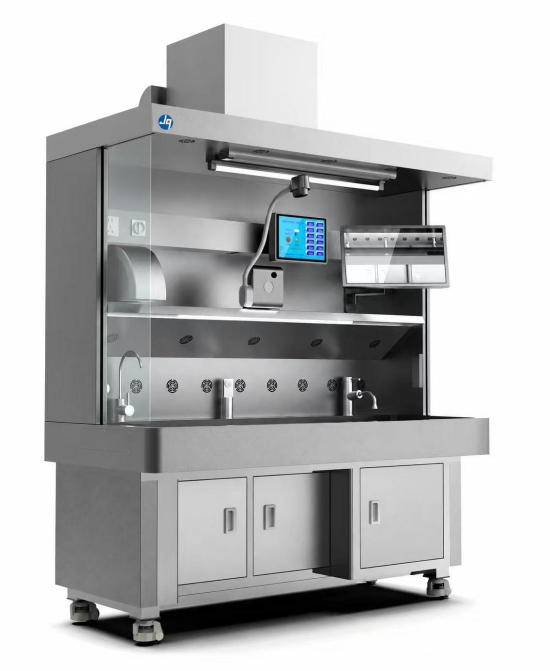
A grossing station is a specialized pathology workstation designed to support specimen examination, dissection, measurement, documentation, and tissue sampling.
Unlike ordinary laboratory benches, grossing stations are engineered specifically for pathology environments where biological specimens and formalin-fixed tissues are handled daily.
Modern grossing stations typically integrate multiple functions into a single workstation, including:
Ventilation systems
Specimen washing systems
Work lighting
Tissue collection areas
Instrument storage
Waste disposal systems
Digital imaging support
These integrated features help laboratories improve both operational efficiency and workplace safety.
As specimen volumes increase, grossing stations become increasingly important for maintaining consistent workflows and reducing operator fatigue.
Why Grossing Stations Are Essential for Laboratory Safety
One of the primary reasons laboratories invest in modern grossing stations is safety.
Pathology personnel are routinely exposed to formalin vapors, biological materials, sharp instruments, and potentially infectious specimens.
Without proper ventilation and workstation design, long-term exposure can create health risks for laboratory staff.
Modern grossing stations are equipped with engineered airflow systems that capture and remove hazardous vapors directly from the work area.
This helps maintain a safer working environment while supporting compliance with occupational health and laboratory safety regulations.
In many laboratories, upgrading the grossing station is one of the most effective ways to improve workplace safety without disrupting existing workflows.
The Impact of Grossing on Specimen Traceability
Specimen traceability begins long before a slide reaches a scanner or pathologist.
The grossing stage is where specimens are first verified, documented, and associated with patient records.
Every cassette generated during tissue sampling originates from decisions made at the grossing station.
If specimens are incorrectly identified or documented at this stage, downstream automation systems cannot correct those errors.
This is why many pathology laboratories are integrating grossing stations with:
Laboratory Information Systems (LIS)
Barcode tracking systems
Cassette printers
Digital imaging platforms
By connecting grossing activities directly to laboratory data systems, laboratories can improve chain-of-custody management and reduce identification risks.
Why Traditional Grossing Rooms Are Becoming Outdated
Many pathology laboratories still operate grossing rooms that were designed years or even decades ago.
These environments often rely on:
Basic workbenches
Limited ventilation
Manual documentation
Paper-based workflows
While these setups may remain functional, they often struggle to support modern laboratory requirements.
As specimen volumes increase and digital pathology adoption accelerates, traditional grossing rooms can become workflow bottlenecks.
Common challenges include:
Challenge | Impact on Laboratory |
Poor ventilation | Increased staff exposure |
Manual documentation | Higher error risk |
Limited workspace | Reduced efficiency |
Poor ergonomics | Operator fatigue |
Lack of integration | Traceability issues |
For laboratories seeking higher throughput and improved quality management, modernization of the grossing area is becoming increasingly important.
How Modern Grossing Stations Improve Efficiency
Efficiency improvements often extend far beyond specimen examination itself.
Modern grossing stations are designed to reduce unnecessary movement and simplify routine tasks.
Features such as integrated sinks, tissue collection systems, barcode scanners, cassette printing support, and digital image capture can significantly streamline workflow operations.
This allows pathology personnel to focus more on specimen evaluation and less on administrative tasks.
In high-volume laboratories, even small improvements in grossing efficiency can create measurable gains throughout the entire pathology workflow.
Because grossing occurs at the beginning of the process, any improvement achieved at this stage often produces downstream benefits in tissue processing, embedding, sectioning, and reporting.
Supporting Digital Pathology Workflows
Digital pathology begins much earlier than many laboratories realize.
Before a specimen can be scanned, analyzed by artificial intelligence, or reviewed remotely, it must first be accurately documented and sampled.
Modern grossing stations increasingly support digital pathology initiatives through:
Barcode integration
Digital photography systems
Specimen documentation tools
LIS connectivity
These capabilities improve information accuracy while reducing reliance on handwritten notes and manual record keeping.
As laboratories continue investing in digital pathology infrastructure, the grossing station is becoming an important link between physical specimen handling and digital data management.
What Should Laboratories Consider When Selecting a Grossing Station?
Choosing a grossing station should involve more than comparing dimensions and pricing.
Laboratory managers should evaluate factors such as:
Specimen Volume
High-volume laboratories require larger work surfaces and more robust ventilation systems.
Safety Requirements
Airflow design, vapor extraction efficiency, and compliance with local regulations should be carefully reviewed.
Workflow Integration
The ability to integrate with LIS systems, barcode workflows, and digital pathology platforms is increasingly important.
Ergonomics
Workstation design directly affects staff comfort and productivity.
Future Expansion
Laboratories planning automation projects should consider how the grossing station will fit within broader workflow modernization initiatives.
Selecting equipment that supports future growth often provides greater long-term value than focusing solely on immediate requirements.
The Future of Grossing Stations in Pathology Laboratories
As pathology laboratories continue their automation journey, grossing stations are evolving from standalone workstations into connected workflow hubs.
Future grossing environments are expected to incorporate:
Smart specimen tracking
AI-assisted documentation
Integrated imaging systems
Automated data capture
Enhanced safety monitoring
These developments will further strengthen specimen traceability while improving efficiency and quality control.
For laboratories planning long-term modernization projects, the grossing station should be viewed as an important investment in workflow infrastructure rather than simply a piece of furniture.
Conclusion
The grossing station plays a critical role in specimen handling, traceability, laboratory safety, and workflow efficiency. Although often overshadowed by downstream technologies such as scanners and digital pathology platforms, many of the most important pathology processes begin at the grossing stage.
Modern grossing stations help laboratories improve specimen management, reduce safety risks, support digital pathology initiatives, and establish a stronger foundation for future automation.
As pathology laboratories continue to modernize, investing in a well-designed grossing station is becoming an important step toward building a safer, more efficient, and more connected laboratory environment.
Jinquan Medical provides comprehensive pathology laboratory automation solutions, including grossing stations, tissue processors, cassette printers, slide printers, stainers, coverslippers, and archive management systems. If your laboratory is planning workflow modernization or pathology automation projects, visit JinquanMedical.com to explore solutions designed for modern histopathology laboratories.