How Much Can a Pathology Laboratory Save by Automating Slide Printing?
Table of Content
[Hide]
Introduction
For many pathology laboratories, slide printing is often viewed as a routine operational task rather than a strategic investment. As a result, decisions regarding slide identification systems are frequently based on equipment purchase price alone.
However, as specimen volumes continue to increase and laboratories face growing pressure to improve turnaround times, maintain traceability, and support digital pathology initiatives, the true cost of manual slide labeling becomes increasingly difficult to ignore.
The question laboratory managers should ask is no longer whether automated slide printing is necessary, but how much value it can generate across the entire pathology workflow.
When evaluated from a total cost of ownership perspective, automated slide printing can significantly reduce labor requirements, minimize identification errors, improve workflow efficiency, and provide the infrastructure needed for future laboratory automation.
The Hidden Cost of Manual Slide Labeling
Many laboratories continue to use handwritten slide identification because the process appears simple and inexpensive. In reality, manual labeling introduces costs that are rarely reflected in equipment budgets.
Every manually labeled slide requires technician time. Information must be written, verified, and cross-checked against specimen records. Even when performed correctly, these repetitive tasks consume valuable labor hours that could otherwise be allocated to higher-value laboratory activities.
The challenge becomes more significant as specimen volumes increase. A laboratory processing several hundred slides per day may spend dozens of labor hours each month on labeling-related activities alone.
While these costs may seem insignificant on a per-slide basis, they become substantial when measured across thousands of specimens and multiple years of operation.
For laboratory managers focused on operational efficiency, manual labeling often represents an overlooked productivity bottleneck.
Why Identification Errors Are More Expensive Than Most Laboratories Realize
Labor costs are only part of the equation.
The financial impact of slide identification errors is often much greater than the cost of the labeling process itself.
When a slide is mislabeled, unreadable, or incorrectly associated with a specimen, laboratories may be forced to perform additional verification procedures. In some situations, slides may require rescanning, restaining, recutting, or complete reprocessing.
These corrective actions consume technician time, delay diagnostic workflows, and reduce laboratory throughput.
More importantly, identification errors introduce unnecessary risk into the diagnostic process. Pathologists rely on accurate specimen identification to make clinical decisions. Any uncertainty regarding specimen identity can compromise workflow confidence and create compliance concerns.
For laboratories operating under accreditation requirements and quality management systems, preventing errors is almost always more cost-effective than correcting them after they occur.
How Automated Slide Printing Improves Laboratory Productivity
The primary benefit of automated slide printing is not simply faster printing. The real advantage lies in workflow standardization.
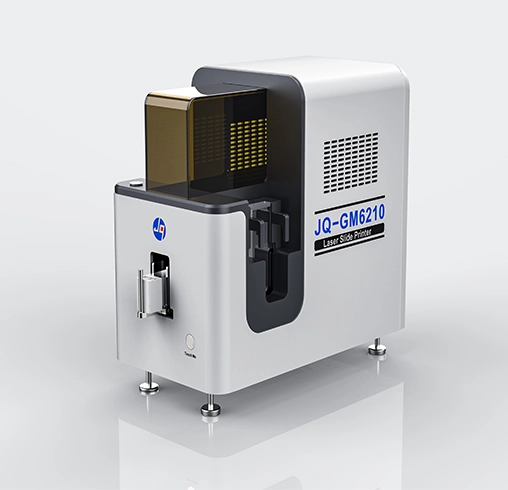
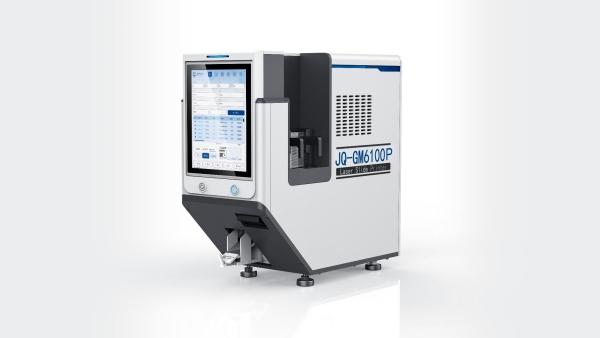
Modern slide printers can automatically receive specimen information from Laboratory Information Systems (LIS), eliminating the need for manual transcription. Patient identifiers, accession numbers, barcodes, and QR codes can be printed directly onto microscope slides with minimal operator intervention.
This reduces repetitive administrative tasks while improving consistency across all specimens.
As a result, laboratories can process higher specimen volumes without proportionally increasing staffing requirements.
For facilities experiencing continuous growth, this operational efficiency can have a significant long-term impact on overall laboratory performance.
Reducing Labor Dependency in High-Volume Laboratories
Many pathology laboratories around the world are experiencing increasing workloads while simultaneously facing shortages of qualified laboratory personnel.
Recruiting and training additional staff can be expensive and time-consuming. As specimen volumes continue to rise, laboratories often find it difficult to scale operations using labor alone.
Automation offers an alternative approach.
By eliminating manual labeling procedures, automated slide printing allows laboratory personnel to focus on higher-value tasks such as quality control, workflow management, specimen preparation, and technical support.
Rather than increasing headcount to accommodate growth, laboratories can improve productivity by optimizing existing resources.
For procurement teams, this represents one of the most compelling financial arguments for automation.
Supporting Digital Pathology and Future Laboratory Expansion
The adoption of digital pathology continues to accelerate across hospitals, reference laboratories, and research institutions.
Technologies such as whole-slide imaging, AI-assisted diagnostics, remote pathology consultation, and centralized pathology networks all depend on reliable specimen identification.
Barcode-based workflows serve as the foundation for these systems.
If slide identification remains inconsistent or manually managed, digital pathology initiatives may struggle to achieve their full potential.
Automated slide printing helps create a standardized identification process that supports digital pathology integration from the very beginning.
For laboratories planning future technology investments, selecting the right slide printing solution today can help avoid costly workflow redesigns later.
Evaluating Total Cost of Ownership Instead of Purchase Price
One of the most common mistakes in laboratory procurement is focusing exclusively on equipment acquisition costs.
While purchase price is important, it represents only one component of the total investment.
Laboratories should evaluate slide printing solutions based on their total cost of ownership (TCO), which includes both direct and indirect operational expenses.
Cost Category | Considerations |
Equipment Investment | Initial acquisition cost |
Consumables | Ribbons, labels, and replacement materials |
Maintenance | Clean nozzle clog and downtime |
Labor | Daily operation and administrative workload |
Error Management | Rework, rescanning, and verification activities |
Future Upgrades | Compatibility with digital pathology systems |
A lower-priced system may not always provide the lowest long-term operating cost. In many cases, solutions that reduce labor dependency and improve workflow efficiency generate greater value over time.
Why More Laboratories Are Investing in End-to-End Automation
Slide printing is only one component of a modern pathology workflow.
As laboratories continue to optimize operations, many discover that improvements in one area naturally lead to automation opportunities elsewhere.
Laboratories that implement automated slide printing often begin evaluating additional technologies such as:
Grossing station
Automated Tissue Processors
Cassette Printer
Automatic Stainers
Coversliippers
Archive Management Systems
This shift reflects a broader industry trend toward fully integrated pathology laboratory automation.
Rather than purchasing individual devices independently, many laboratories now evaluate how each system contributes to an efficient, traceable, and scalable workflow.
Building a Business Case for Automation
For laboratory managers, the strongest justification for automation is rarely a single performance metric.
Instead, the value comes from the combined impact of:
Reduced manual labor
Fewer identification errors
Improved specimen traceability
Better workflow visibility
Enhanced compliance support
Greater readiness for digital pathology
When these factors are considered together, automated slide printing often delivers benefits that extend well beyond the printing process itself.
It becomes an investment in operational reliability, workflow efficiency, and long-term laboratory growth.
Conclusion
The true cost of slide identification extends far beyond the price of a printer or a box of labels.
As pathology laboratories process increasing specimen volumes and adopt more advanced digital technologies, manual labeling methods become increasingly difficult to justify from both an operational and financial perspective.
Automated slide printing helps laboratories reduce labor dependency, improve specimen traceability, minimize identification errors, and establish a stronger foundation for future automation initiatives.
For laboratories planning equipment upgrades, workflow optimization projects, or digital pathology implementation, evaluating slide printing through the lens of return on investment may reveal opportunities for significant long-term savings.
Jinquan Medical provides comprehensive pathology laboratory automation solutions, including grossing station, tissue processor, cassette printers, slide printers, stainers, coverslippers, and archive management systems. If you are exploring ways to improve laboratory efficiency and support future growth, visit JinquanMedical.com to learn more about our pathology automation solutions or speak with our technical team about your project requirements.
FAQ
Is automated slide printing suitable for small pathology laboratories?
Yes. Even smaller laboratories can benefit from improved labeling consistency, reduced manual workload, and enhanced specimen traceability.
How does automated slide printing support digital pathology?
Automated slide printers generate machine-readable barcodes and identifiers that integrate with scanners, LIS platforms, and digital pathology software.
What are the biggest cost savings associated with automation?
Most laboratories see savings through reduced labor requirements, fewer identification errors, improved workflow efficiency, and lower rework rates.
Can slide printers integrate with existing LIS systems?
Most modern pathology slide printers are designed to integrate with laboratory information systems, helping eliminate manual data entry.
Is ROI only measured through labor savings?
No. ROI should also include improvements in quality control, compliance, workflow efficiency, traceability, and future automation readiness.