How to Choose a Histopathology Equipment Supplier: A Buyer’s Guide for Pathology Labs
Table of Content
[Hide]
Choosing a histopathology equipment supplier is not simply about comparing machine specifications and finding the lowest quotation. For hospitals, pathology laboratories, diagnostic centers, research institutions, and medical equipment distributors, the more important question is whether a supplier can support the actual pathology workflow and continue providing reliable products, technical support, and service as laboratory requirements develop.
A histopathology laboratory operates as a connected process. Specimens move from reception and gross examination through cassette identification, tissue processing, embedding, sectioning, slide identification, staining and coverslipping, diagnosis, and eventually block and slide archiving. Equipment purchased for one stage can influence efficiency and traceability at the next. A laboratory may initially need only a cassette printer or grossing station but later add slide printers, tissue processors, staining equipment, or storage systems as specimen volumes increase and automation develops.
For this reason, evaluating a histopathology equipment supplier should go beyond a product catalog. Manufacturing capability, product range, workflow compatibility, LIS/HIS integration, total operating cost, technical documentation, after-sales service, and future scalability all need to be considered before making a long-term purchasing decision.
Start With the Pathology Workflow, Not the Equipment Catalog
Before comparing manufacturers, laboratories should first understand where the equipment will fit into their existing workflow. A typical histopathology process may involve specimen reception, grossing, cassette identification, tissue processing, embedding, sectioning, slide identification, staining and coverslipping, diagnosis, and long-term specimen archiving. These stages are interconnected, which means purchasing decisions should not be made entirely in isolation.
For example, introducing automated cassette identification can improve traceability at the grossing stage, but laboratories should also consider how specimen information will later transfer to slides. Similarly, a high-capacity printer may look attractive on a specification sheet but provide little additional value if the laboratory processes specimens individually and requires immediate printing next to the grossing station.
Before requesting quotations, procurement teams should have a clear understanding of their average and peak daily specimen volume, current manual and automated processes, existing cassette and slide identification methods, and whether printing is handled on demand or in batches. Available laboratory space, staffing levels, LIS/HIS environment, barcode requirements, local installation and service expectations should also be considered. Just as importantly, buyers should think beyond current workload and consider whether specimen volumes or automation requirements are likely to increase over the next several years.
For laboratories planning several stages of automation, reviewing an integrated pathology laboratory solution before selecting individual machines can make the procurement process much clearer. The objective is not to create a longer equipment list, but to identify where bottlenecks, identification risks, repetitive manual tasks, and future capacity requirements actually exist.
Manufacturer or Trading Supplier: What Should B2B Buyers Consider?
Both manufacturers and distributors can play useful roles in medical equipment procurement. However, when a project involves customized configurations, software connectivity, technical documentation, product modifications, long-term spare parts supply, or distributor cooperation, understanding who actually develops and manufactures the equipment becomes increasingly important.
Direct communication with a manufacturer can shorten the distance between the customer's technical requirements and the people responsible for developing the equipment. This becomes particularly relevant in pathology automation, where laboratories may have different cassette types, barcode requirements, LIS/HIS environments, printing workflows, throughput requirements, and physical layouts.
When evaluating a potential manufacturer, buyers should ask:
Does the company manufacture the core pathology equipment itself?
Which products are developed internally?
Is there a dedicated R&D team?
Can technical questions be discussed directly with engineers?
Are production and quality-control processes documented?
Can the supplier support software or workflow configuration?
How are equipment problems handled after installation?
How long has the company focused on pathology-related equipment?
These questions reveal considerably more than a product brochure. Buyers considering a new supplier should review its pathology equipment manufacturing capabilities alongside individual product specifications rather than relying only on a catalog or quotation.
For distributors in particular, direct manufacturing capability can also matter when discussing technical training, market-specific requirements, troubleshooting, lead times, product updates, and long-term portfolio development. A manufacturer that can communicate directly about both technical and commercial requirements is generally better positioned to support a long-term B2B relationship.
Evaluate the Product Portfolio as One Connected Workflow
A large catalog does not automatically make a supplier suitable for a pathology laboratory. What matters is whether the manufacturer's equipment supports meaningful stages of the actual histopathology workflow and whether those products can fit together as laboratory requirements develop.
At the beginning of the process, specimens need an appropriate environment for gross examination. A laboratory evaluating a histology grossing station should consider how specimens will be identified at the same workstation and how the resulting cassettes will enter the next processing stage. After grossing and cassette identification, tissue preparation may require equipment such as a tissue processor. Downstream requirements can then include slide identification, staining and coverslipping, rapid tissue freezing, sorting, transportation, and long-term block and slide storage.
Looking at these products as one connected workflow is especially valuable when building a new pathology department or sourcing equipment as a distributor. Instead of purchasing unrelated instruments from several suppliers and trying to connect them later, buyers can first review the manufacturer's complete pathology equipment range and determine how much of the planned workflow can realistically be supported by the same supplier.
For a hospital, this approach can simplify equipment planning and future expansion. For a distributor, it can create opportunities to support more than one customer requirement. Instead of introducing only a cassette printer, for example, the distributor may gradually provide grossing, tissue processing, cassette and slide identification, staining, coverslipping, and archiving equipment as the customer's laboratory develops.
Evaluate Cassette Identification as Part of Specimen Traceability
Cassette printing should not be evaluated simply as a replacement for handwriting. In a modern histopathology workflow, the cassette becomes an important carrier connecting specimen identity with downstream processing and tracking. Identification information must remain readable during routine processing, while barcodes or QR codes may also need to support reliable scanning and specimen traceability.
Buyers comparing cassette printers should therefore consider print durability, barcode readability, cassette compatibility, chemical resistance, printing speed, loading capacity, maintenance requirements, software connectivity, and recurring consumable costs. The choice between on-demand and batch printing should also be based on how specimens actually move through the laboratory rather than simply on which machine has the higher maximum output.
For laboratories evaluating permanent direct marking, a laser cassette printer can be considered alongside other identification technologies. Laboratories where cassettes need to be generated individually during grossing may prefer an on-demand cassette printer, while facilities that prepare larger quantities centrally may benefit from batch cassette printing systems.
The procurement question should therefore not simply be, “Which cassette printer is faster?” A more useful question is, “Which printing method fits the way specimens are received, identified, processed, and tracked in our laboratory?”
Slide Identification Should Continue the Same Traceability Logic
Specimen traceability does not stop once the tissue block has been prepared. When sections are transferred from blocks to microscope slides, identification needs to remain consistent so that each slide can be reliably associated with the correct specimen and case.
Cassette and slide printers should therefore be evaluated as connected parts of the same identification workflow. When comparing a laser slide printer, buyers should consider print durability, barcode readability, slide compatibility, physical footprint, printing capacity, workflow type, maintenance requirements, and connectivity with the laboratory's existing information environment.
Different laboratories may require very different configurations. A laboratory with several microtomy workstations may prefer an on-demand slide printer positioned close to the point of sectioning, allowing technicians to print slides as they are required. A centralized facility handling larger volumes may instead benefit from batch slide printing systems.
The objective is not necessarily to maximize printing capacity. It is to reduce manual identification and matching steps without creating additional sorting work elsewhere in the laboratory. Looking at cassette and slide identification together allows buyers to determine whether the proposed equipment can support consistent specimen identification throughout the workflow.
LIS/HIS Integration Should Be Discussed Before Equipment Purchase
One of the easiest ways to create a new laboratory bottleneck is to automate the physical process while leaving information transfer manual. A printer may perform its individual task well, but if technicians still need to repeatedly type patient or specimen information, switch between systems, or manually match printed cassettes and slides with cases, part of the expected benefit of automation is lost.
For this reason, LIS/HIS compatibility should be discussed early in the procurement process. Buyers should determine how case information reaches the instrument, which barcode formats are required, whether print templates can be configured, whether scanners can trigger printing, how data is transferred between systems, and what technical cooperation will be required during integration.
Laboratory personnel and the relevant IT or LIS team should ideally participate in this discussion before equipment specifications are finalized. Procurement teams need to understand what LIS/HIS is currently used, how the printer will receive specimen information, which 1D or 2D barcode formats are required, whether external barcode scanners will be used, whether scan-to-print operation is necessary, and whether information needs to move consistently from cassette identification to slide identification.
These requirements can differ substantially between a small independent laboratory and a large hospital pathology department. There is therefore no single integration configuration that is automatically appropriate for every customer. The supplier should be able to discuss the actual workflow and determine whether the proposed equipment can fit into it.
Don't Compare Equipment Price Without Comparing Total Cost of Ownership
Initial purchase price is important, but it represents only one part of the actual cost of owning pathology equipment. Two machines may perform a similar function and carry different quotations, yet the lower-priced system can become more expensive over time if it requires proprietary consumables, frequent maintenance, costly replacement components, additional manual work, recurring software expenses, or more downtime.
When comparing quotations, procurement teams should therefore look beyond the equipment price and determine exactly what is included. Consumables such as ink, ribbon, labels, or other proprietary materials should be calculated according to expected annual specimen volume. Routine maintenance requirements, replacement parts, software licenses or upgrades, system integration, operator training, warranty coverage, shipping, installation, and potential downtime should also be considered.
This becomes particularly relevant when comparing different cassette and slide printing technologies. A laboratory considering a laser cassette printing system should compare its operating requirements with alternative technologies over the expected service life of the equipment, not simply compare the initial machine quotations.
For high-volume laboratories, relatively small recurring costs can become significant when multiplied across thousands of cassettes or slides every month. The more useful purchasing question is therefore not simply, “How much does the machine cost?” but “What will this system cost to operate, maintain, and support throughout its expected service life?”
Match Equipment Capacity to Actual Laboratory Throughput
Higher throughput specifications can be attractive on paper, but the fastest or largest machine is not automatically the best investment. A pathology department processing a moderate number of specimens has different requirements from a centralized laboratory serving several hospitals, while laboratories with a steady specimen flow operate differently from facilities that experience concentrated workload peaks.
Procurement teams should evaluate average daily specimen volume, peak workload, staffing levels, number of workstations, specimen arrival patterns, expected turnaround times, and projected growth over the next several years. The goal should be to choose equipment with sufficient capacity to avoid bottlenecks without paying for unnecessary capability that provides little operational benefit.
Workflow configuration matters as much as theoretical speed. If technicians need immediate cassette printing while grossing, an on-demand system may reduce sorting and matching. If a central workstation prepares large numbers of cassettes in advance, batch printing may be more appropriate. If both situations occur in the same facility, buyers may need equipment capable of supporting a mixed workflow.
The same principle applies to slide printers, tissue processors, staining equipment, and other pathology instruments. Equipment should be selected around actual laboratory operations rather than simply around the largest number shown on a specification sheet.
Look Beyond Printing When Planning Laboratory Automation
Cassette and slide identification may be among the most visible parts of laboratory digitization, but they are not the only areas where automation can improve workflow. Once specimen identification has been improved, laboratories often begin examining repetitive downstream activities such as staining, coverslipping, sorting, transportation, and archiving.
Staining and coverslipping, for example, should be evaluated in relation to workload, consistency, reagent handling, contamination control, and technician involvement. Laboratories looking to reduce manual work in this stage can evaluate an automatic individual stainer and coverslipper as part of a broader pathology workflow rather than treating staining as an entirely separate purchasing project.
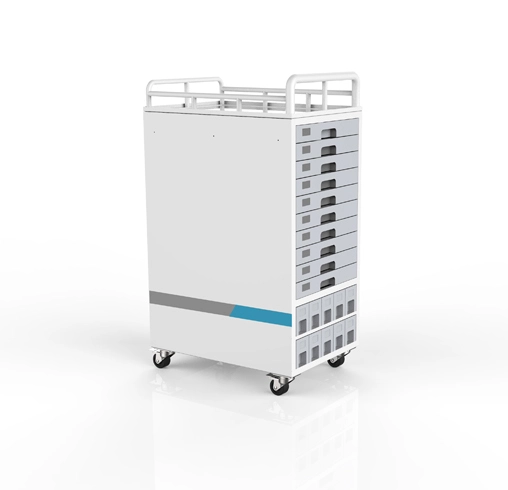
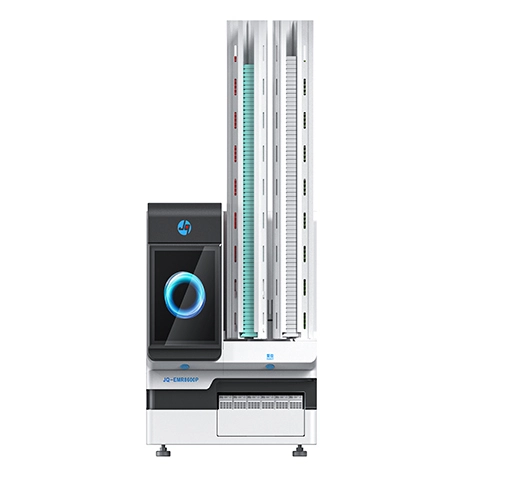
Archiving presents another challenge as specimen volumes increase. Manually sorting, storing, retrieving, and returning large numbers of blocks and slides can consume substantial staff time. Laboratories planning a higher level of automation may therefore also evaluate a block and slide batch reader together with dedicated block and slide storage cabinets.
This broader perspective changes the way a supplier should be evaluated. The question is no longer whether a manufacturer can provide one suitable printer; it becomes whether the supplier has the product and technical capability to support several stages of laboratory development as automation requirements expand.
Verify Quality Documentation and Regulatory Requirements Early
Medical and laboratory equipment documentation should never be treated as an afterthought. Requirements can vary according to the equipment, destination country, healthcare institution, importer, tender, and intended application, so buyers should determine what documentation is required before finalizing an order.
Depending on the project and market, procurement teams may need quality management documentation, applicable product certifications, technical specifications, user manuals, electrical information, installation and maintenance documentation, packaging and labeling information, test reports, and export-related documents. Overseas distributors may also need additional files for product registration or local market access.
This review should take place relatively early in the supplier evaluation process. Discovering a documentation gap after pricing, configuration, and commercial terms have already been agreed can delay registration, importation, tender participation, or installation.
Buyers should therefore ask suppliers to confirm documentation for the specific equipment model and destination market rather than assuming that a general company certificate applies to every product. A professional manufacturer should be able to explain what documents are currently available, which requirements need further confirmation, and what information the buyer needs to provide.In addition to capital equipment, healthcare procurement teams may also need reliable sourcing and documentation support for routine medical consumables. For selected diabetes-care and injection products, buyers can refer to Tonmit’s medical device documentation and compliance support when reviewing product identity, packaging, applicable records, and destination-market requirements.
After-Sales Support Is Part of the Equipment Purchasing Decision
Equipment quality and after-sales capability cannot realistically be separated, especially when purchasing pathology instruments internationally. Even reliable equipment may eventually require installation guidance, software assistance, troubleshooting, routine maintenance, spare parts, or operator support.
Before placing an order, buyers should understand how technical support actually works. They should determine who handles technical questions, whether remote troubleshooting is available, what information must be provided when reporting a fault, how replacement parts are supplied, whether product training is available, how software-related issues are handled, and what warranty conditions apply to the specific model.
The manufacturer's technical and after-sales service should therefore be reviewed alongside equipment specifications and pricing.
For overseas distributors, this issue is even more important. The local distributor is often the first party contacted when an end user encounters a problem. If the manufacturer cannot provide effective technical communication, spare parts, or troubleshooting assistance, the distributor ultimately carries the reputational cost with the hospital or laboratory.
A strong manufacturer-distributor relationship therefore needs to continue well beyond shipment. Product training, technical documentation, fault diagnosis, spare parts support, and communication efficiency all contribute to whether the equipment can be successfully supported in the local market.
What Should Medical Equipment Distributors Look for in a Manufacturer?
Hospitals and distributors approach equipment procurement from different perspectives. A hospital primarily needs equipment that performs reliably within its laboratory, while a distributor must also determine whether the manufacturer can support a sustainable local business.
Product range is important, but it should not be evaluated simply by counting the number of models in a catalog. A distributor needs to know whether the manufacturer's portfolio covers enough related pathology applications to support different customer requirements and whether new products continue to be developed as laboratory automation evolves.
Supply stability and technical support are equally important. The manufacturer should be able to provide consistent product supply, appropriate technical and regulatory documentation, product training, troubleshooting assistance, and access to spare parts. Catalogs, product images, videos, manuals, and other technical materials also matter because distributors need these resources when introducing equipment to hospitals, laboratories, and local service teams.
Communication becomes particularly important after the first order. A distributor should know whether commercial questions can be answered efficiently, whether technical issues can reach the appropriate engineers, and whether the manufacturer is prepared to support market development rather than simply complete individual transactions.
For this reason, distributors should evaluate the manufacturer's pathology equipment portfolio and technical support capability together instead of choosing a supplier based solely on the price of one popular machine.
Factory and Product Verification Can Reduce Procurement Risk
For larger hospital projects, distributor agreements, or long-term procurement programs, buyers should verify the supplier beyond its website and quotation. A factory visit provides an opportunity to observe production organization, equipment assembly, quality-control processes, product testing, inventory management, technical personnel, and actual equipment operation.
A factory visit can also make technical communication more efficient. Procurement teams can bring their workflow requirements, cassette or slide samples, software questions, and expected throughput directly to the manufacturer and discuss them with both sales and technical personnel.
When an on-site visit is not practical, remote verification can still provide useful information. Buyers can request live video meetings, workshop videos, product demonstrations, technical manuals, certificates, detailed specifications, application references, and discussions with technical staff. Jinquan's existing website includes a pathology equipment video center covering several equipment categories, while manuals and catalogs are available through its technical downloads. The supplied site structure confirms dedicated product-video and downloadable technical-resource sections alongside the product pages.
These materials should not replace supplier due diligence, but they can help buyers narrow their shortlist and prepare more specific questions before moving into commercial negotiations.
A Practical Checklist Before Choosing a Histopathology Equipment Supplier
Before making a final supplier decision, procurement teams should return to a few fundamental questions. First, determine whether the supplier actually manufactures and develops its core pathology equipment and whether technical questions can reach the people responsible for those products. Then consider whether the product portfolio supports several stages of the laboratory workflow rather than only the immediate equipment requirement.
The proposed equipment should match both current and expected specimen throughput, fit existing cassette or slide specifications where applicable, and support the laboratory's barcode, traceability, and LIS/HIS requirements. Buyers should also confirm what technical and regulatory documentation is available for the destination market and whether the supplier has experience supporting international customers or distributors.
Operating requirements deserve the same attention as technical specifications. Buyers should understand what consumables are required, which components need routine replacement, how maintenance is performed, how spare parts are supplied, and whether operators or distributors can receive technical training.
Finally, consider what happens after installation. A suitable supplier should have a clear process for technical support, warranty cases, software assistance, spare parts, and future equipment requirements. For laboratories planning continued automation, the manufacturer's ability to support future expansion can be just as important as meeting today's specification.
What Information Should Buyers Include in an RFQ?
Sending every manufacturer the same short message—“Please send your catalog and best price”—rarely provides enough information for an accurate equipment recommendation. A more useful RFQ explains where the equipment will be used, how the laboratory currently operates, and what workload the system needs to handle.
Buyers should provide the destination country, type of institution or customer, required equipment or workflow, expected daily specimen volume, current specimen processing and identification methods, and whether cassette or slide printing is performed on demand, in batches, or through a combination of both.
For identification equipment, it is useful to provide the cassette or slide types currently in use, barcode or QR-code requirements, and relevant LIS/HIS information. Required certificates or technical documentation, expected order quantity, installation and training requirements, and the desired delivery schedule should also be communicated early.
Distributors can additionally explain their target customer groups and local service requirements so the manufacturer can recommend products that are suitable for the intended market rather than simply sending the same quotation used for every inquiry.
For a complete pathology laboratory project, providing a basic workflow diagram can be even more useful than sending a long equipment list. It gives the manufacturer an opportunity to understand how each instrument will be used and whether the proposed configuration makes sense as a connected system.
Choosing a Long-Term Histopathology Equipment Partner
There is no single histopathology equipment supplier that is automatically right for every buyer. A smaller laboratory may prioritize compact equipment, straightforward operation, and manageable operating costs. A large hospital may place greater emphasis on throughput, specimen traceability, LIS/HIS integration, and automation across multiple workstations. A distributor may need a manufacturer with a broader product portfolio, reliable documentation, technical training, spare parts, and long-term market support.
What these buyers have in common is that the decision should extend beyond the initial quotation. Product performance and price matter, but manufacturing capability, workflow compatibility, total operating cost, integration, technical support, documentation, and future scalability ultimately determine whether equipment continues to create value after installation.
For laboratories planning a new pathology department or upgrading an existing workflow, reviewing Jinquan's pathology laboratory solutions can help identify equipment according to different application requirements. Buyers and distributors can also explore the complete pathology equipment range before providing their workflow, expected specimen volume, and equipment requirements to contact Jinquan Medical for further technical and commercial discussion.
PREV: No information